Cybercriminals are increasingly targeting people who have already fallen victim to online fraud, using impersonation, synthetic media, phishing websites, and AI-generated communications to convince victims that they are speaking with law enforcement or legitimate recovery professionals.
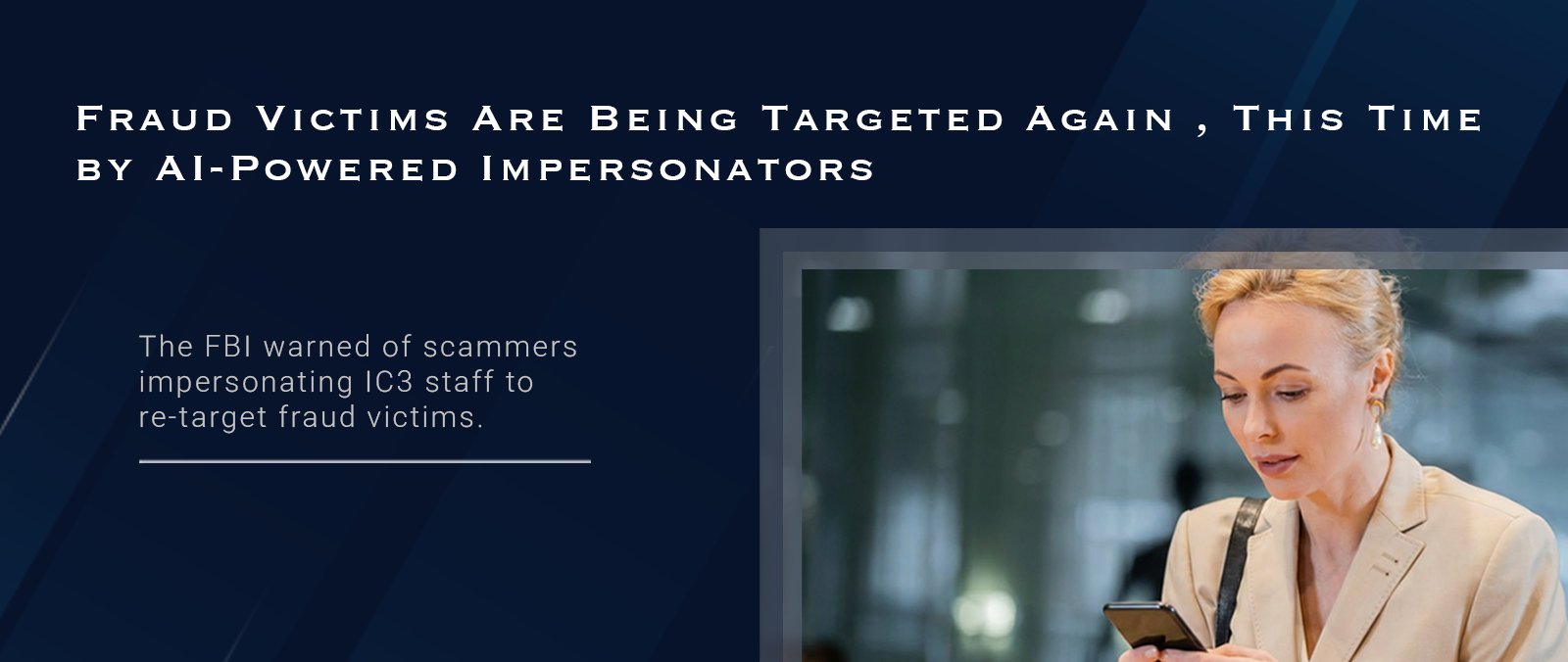
In July 2026, the FBI warned that scammers were impersonating personnel associated with the Internet Crime Complaint Center (IC3) in an effort to re-target individuals who had already reported financial fraud.
For high-net-worth individuals, executives, and family offices, this type of attack represents a larger shift in cybercrime: attackers are no longer simply trying to breach a device. They are building highly convincing digital identities designed to manipulate the person behind it.
How the Attack Works
After a financial scam or cyber incident, a victim may naturally begin searching for help.
That moment can create a second opportunity for criminals.
Attackers may pose as:
- FBI or law-enforcement personnel
- Fraud investigators
- Attorneys
- Financial institutions
- Cybersecurity professionals
- Asset-recovery specialists
- Cryptocurrency recovery firms
The victim may receive a phone call, email, social media message, or even an AI-generated video appearing to come from someone they trust.
The attacker then claims they can assist with recovering stolen funds or resolving the original incident.
What follows may be another request for sensitive information, access credentials, cryptocurrency, banking information, identification documents, or payment.
The victim is essentially attacked twice.
AI Is Making Impersonation More Convincing
Traditional phishing emails were often easy to identify.
Poor grammar, unusual formatting, suspicious links, and unfamiliar senders were common warning signs.
That is changing rapidly.
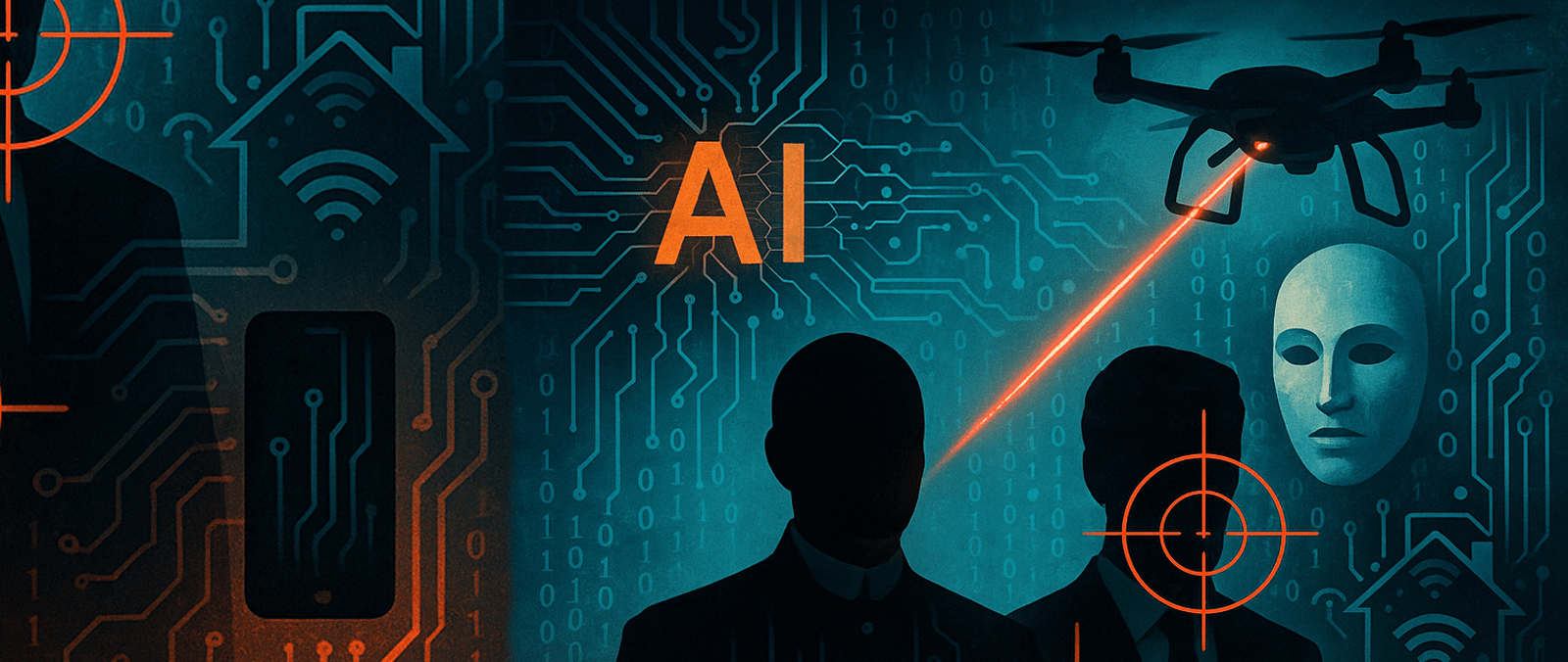
AI can now help criminals reproduce professional communications, generate realistic voices, create synthetic video, imitate writing styles, and develop convincing websites at a scale that was previously difficult to achieve.
A phone call may sound like someone you know.
A video may appear to show a legitimate executive or government official.
An email may closely resemble the way your attorney, assistant, banker, or colleague normally communicates.
For individuals with significant wealth, visibility, or access, the attacker may also have enormous amounts of publicly available information to work with before making contact.
That changes the nature of the threat.
Why High-Net-Worth Individuals Face a Different Risk
Most cybersecurity systems were designed to protect organizations.
Firewalls protect corporate networks.
Endpoint software protects company computers.
Security teams monitor enterprise infrastructure.
But executives and high-net-worth individuals continue operating outside those environments.
Their personal phones, residences, family members, personal email accounts, assistants, social media profiles, financial relationships, smart-home devices, and private communications can all become part of the attack surface.
Cybercriminals understand this.
Instead of attacking a corporation directly, they may attack the person with access to it.
Instead of defeating enterprise cybersecurity, they may impersonate a family member.
Instead of compromising a corporate server, they may compromise a personal email account.
And instead of stealing a password, they may simply convince someone to authorize the transaction themselves.
Warning Signs to Take Seriously
Be particularly cautious when someone unexpectedly contacts you claiming they can recover money, investigate a cybercrime, or represent a government agency.
Requests involving urgent payments, cryptocurrency transfers, banking credentials, authentication codes, identification documents, or remote access to a device should be independently verified.
The FBI specifically warns that IC3 does not contact victims through social media platforms or offer fund-recovery services, and that victims should access the legitimate IC3 website directly rather than relying on links supplied by third parties.
But increasingly, recognizing a scam visually or listening for an artificial voice may not be enough.
The more sophisticated impersonation becomes, the more important independent verification becomes.
The ORCUS Approach: Digital Executive Protection
For high-net-worth individuals and executives, cybersecurity should extend beyond antivirus software and corporate IT.
ORCUS provides Digital Executive Protection designed around the individual’s entire digital environment.
Our approach combines proactive protection, continuous monitoring, intelligence, and human response to help identify threats before they become major incidents.
ORCUS protection can include:
- Personal identity and credential monitoring
- Account and device security
- Exposure and threat monitoring
- Malicious-link analysis
- Identity and phone number verification
- AI voice and impersonation analysis
- Personal email security
- Home and private-network protection
- Digital exposure reduction
- Family and executive protection
- 24/7 cybersecurity response
- Assistance during active cyber incidents
When something unusual happens, an executive should not have to determine alone whether a phone call, link, voice message, transaction request, or digital identity is legitimate.
That is where digital executive protection becomes critical.
Cybersecurity Has Become Personal
The next generation of cybercrime will not always look like hacking.
It may look like your banker.
Your attorney.
Your employee.
Your son or daughter.
Your CEO.
Or even a government official.
For individuals with significant assets, influence, and access, protecting the corporate network is no longer enough.
The individual has become part of the attack surface.